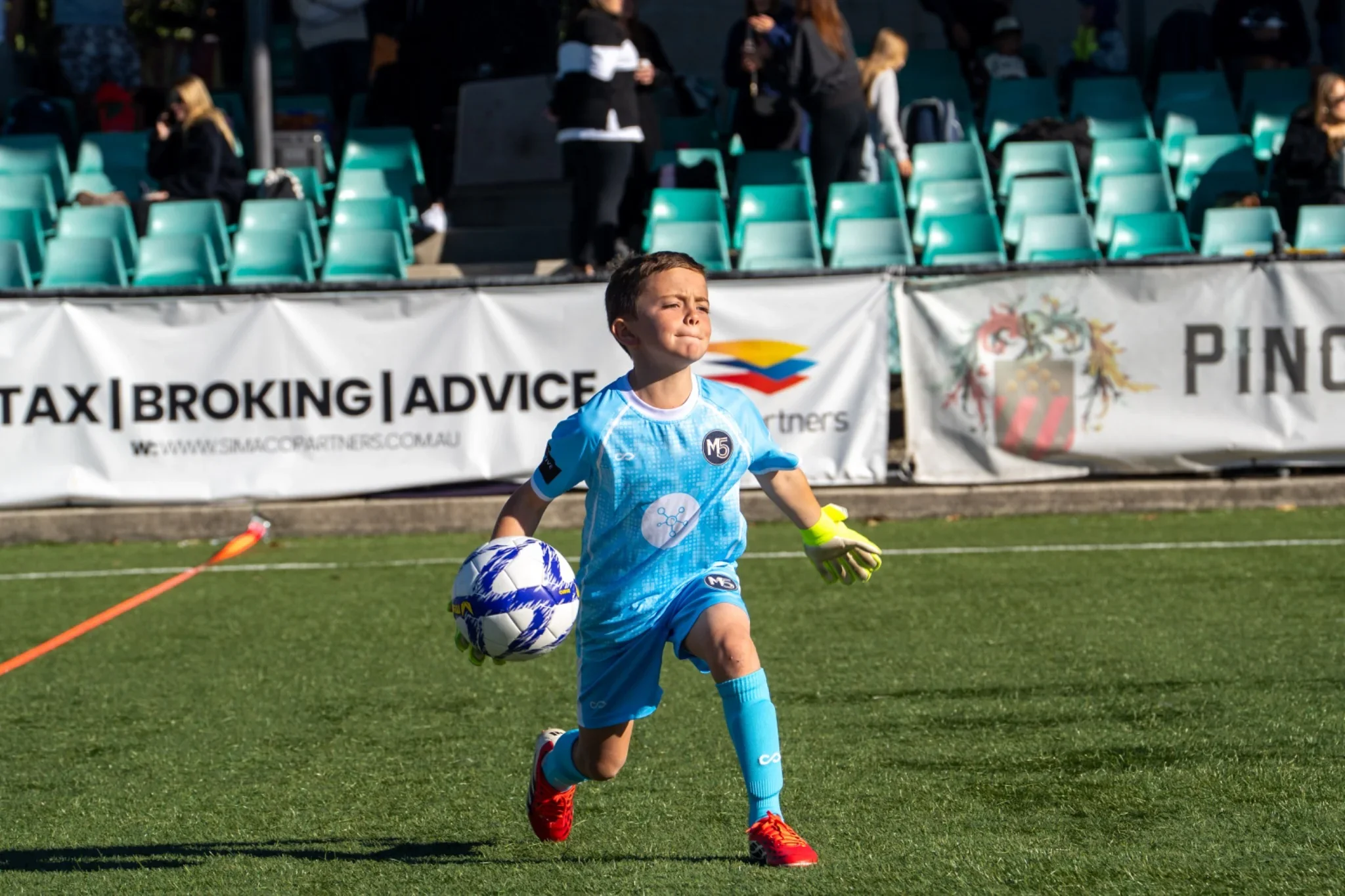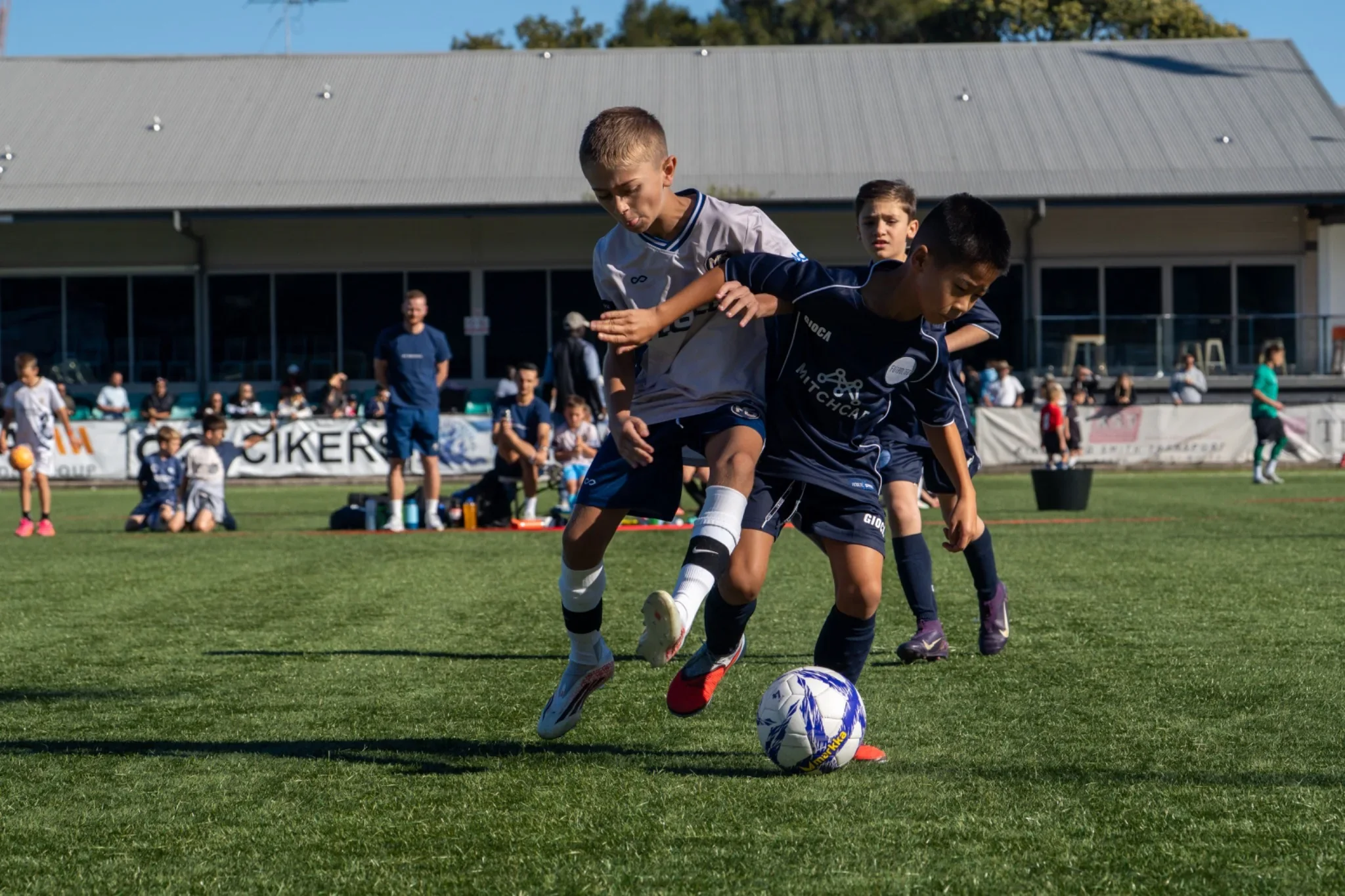
The M5
Pathway
Enter at the right level. Earn what comes next.
One Pathway. Multiple Entry Points.
Earned Progression.
This pathway governs how players enter, progress, and are supported at M5.
Players move forward when they are ready — not by timeline, request, or convenience.
Players may start in different places depending on age, experience, and readiness — but progression through M5 is always earned.
In plain terms: Your child won’t be rushed forward — and won’t be held back unnecessarily.
Our responsibility is simple: Place every player in the environment where they’ll develop best.
The M5 Development Pathway
-
1. Mini's (Ages 3 - 5)
Confidence and coordination through football-based play.
-
2. Membership (U6+)
The foundation stage for skill, habits, and consistency.
-
3. Full-Time Program (FTP)
A high-commitment environment for players craving more.
1. Minis (Ages 3 - 5)
Role in the pathway: Introduction
Minis is the first step of the M5 pathway — built to develop confidence, connection, and coordination through joyful, football-themed play.
This is where children learn to enjoy movement, feel capable, and build early ball familiarity in a positive environment.
Progression:
As players grow and become ready for more structured training, they transition into Weekly Membership.
2. Membership (U6+)
Role in the pathway: Foundation
Weekly Membership is the foundation stage of the M5 pathway — where most players develop their technical base, training habits, and consistency.
This is not a holding pattern. It’s where development happens: repetition, feedback, confidence, and steady improvement over time.
Progression:
Players who consistently demonstrate readiness may be recommended for the Full-Time Program.
3. Full-Time Program (U7 - 12)
Role in the pathway: Performance
The Full Time Program is the highest level of the M5 pathway — a selective, high-commitment environment for players who are ready to train beyond the standard offering.
Entry is earned. Standards are clear. Development remains the priority.
Note: For most players, FTP is a progression from Weekly Membership — not a starting point.

How Players
Progress at M5
Progression at M5 is guided by coaches and based on observable behaviours — not reputation, promises, or short-term outcomes.
Progression is guided by consistent behaviours, including:
Training habits and attendance
Coachability and attitude
Age-appropriate technical development
Emotional readiness for increased demands
We don’t progress players by timeline — we progress them by readiness.
Some players progress quickly. Others build longer foundations. Both paths are valid.
Development is
Not Linear
Good development includes seasons of building.
At times, the best outcome for a player may be:
Remaining at their current level
Adjusting training load
Stepping into an environment that better supports confidence and growth
This is not failure. It is alignment.
Our role is not to protect labels — it is to protect development.
Unsure Where
Your Child Fits?
We’ll guide you to the right entry point based on age, experience, and readiness.
Most families begin with Weekly Membership.
Proudly Sponsored by